
AI Is Changing the Way Customers Shop. Is Your Business Part of the Conversation?
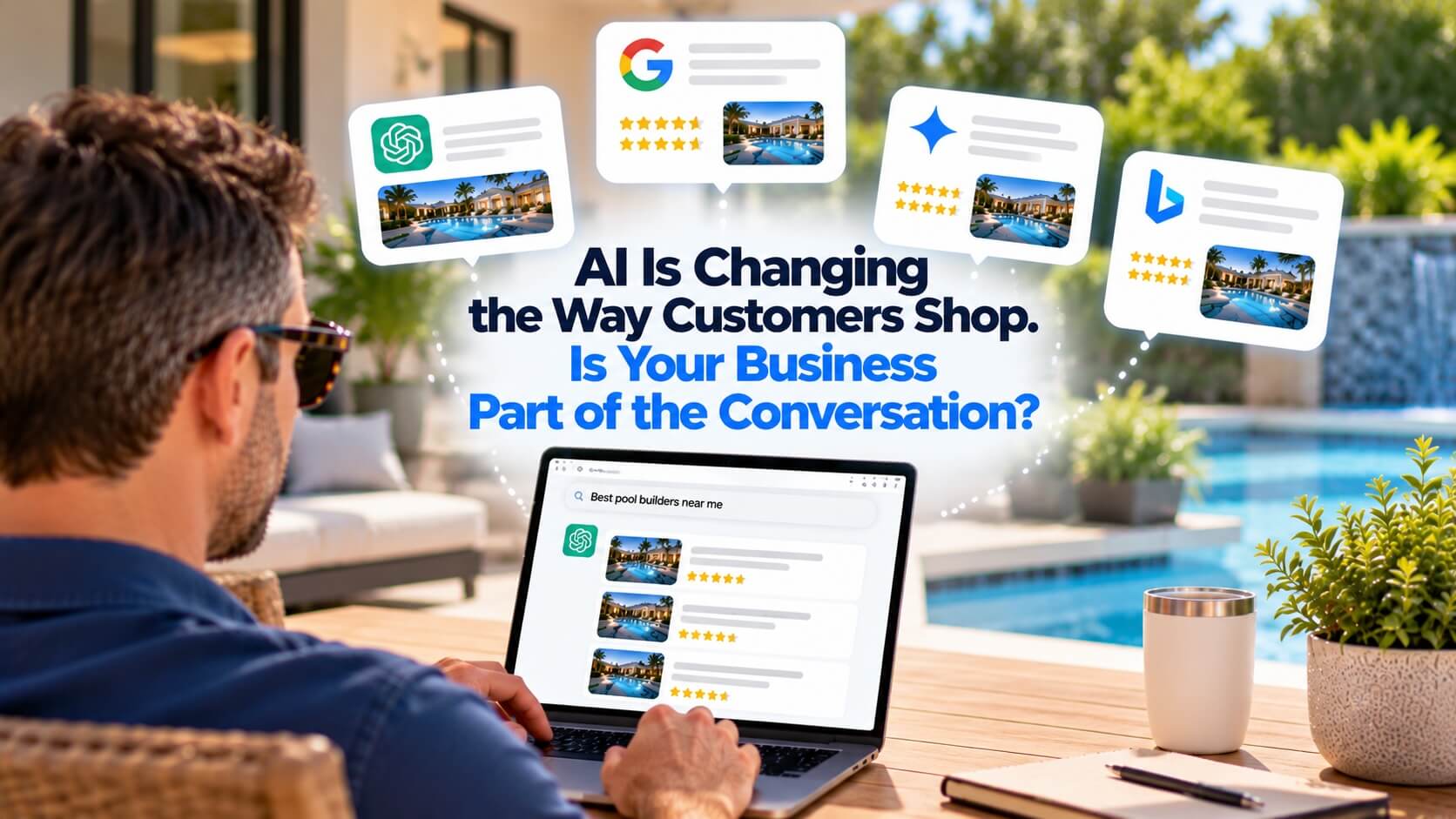
A different first conversation
A family planning a pool used to begin with a search engine, a neighbor, or a visit to a showroom. Now another possibility is emerging: the family asks an AI assistant to explain the difference between fiberglass and gunite, outline the likely work involved, and suggest which local companies deserve a closer look. The company may never hear that initial conversation. Yet the answers can influence which names make the shortlist. This is the practical change behind a great deal of noise about artificial intelligence.
What the research actually says
EMARKETER’s September 15, 2026 Future of Digital 2027 report describes AI gaining influence over what consumers discover and consider before AI controls a meaningful share of digital transactions. That distinction matters. It does not mean a chatbot is about to sell every swimming pool or replace a showroom visit. It means the early research stage may include an additional intermediary. EMARKETER also stresses that established strengths—audience, traffic, trust, and transactions—still matter. A business should not abandon proven marketing channels because a new discovery route is developing.
Where the decision gets shaped
A buyer might ask what a pool costs, which construction approach suits a small yard, how much upkeep to expect, and how to compare warranties. Each answer frames the next question. If a business offers clear, accurate explanations of its specialties and service area, those explanations may be useful to a person researching the decision, regardless of whether the information is encountered through a website, search engine, or AI answer. A vague claim such as ‘best pools in town’ helps less than a specific explanation of project types, process, and service boundaries.
A pool builder example
Consider two builders. One website offers a gallery and a contact form. The other explains design consultations, permitting responsibilities, the phases of construction, what can change a budget, and what homeowners should ask before signing. Neither website can guarantee a recommendation from an AI system. But the second gives a buyer far more material to evaluate. It also makes the eventual sales call more productive: the homeowner arrives knowing the vocabulary and with realistic questions.
What this means for service and hot tubs
A service company can explain which symptoms call for a repair visit, which require immediate attention, and how its maintenance plans differ. A Hot Tub retailer can clarify seating configurations, installation preparation, delivery access, electrical requirements, and ongoing care. These are the kinds of concrete distinctions that help a customer make a decision. They also prevent a salesperson from spending the first fifteen minutes correcting misunderstandings.
The risk of overreacting
AI responses can be incomplete, inconsistent, or wrong. A single test prompt is not a ranking report, and a favorable mention does not prove that a lead will follow. It is tempting to buy a new tool promising guaranteed AI visibility. Resist the shortcut. Start by asking whether your own public information is accurate and whether your business can be clearly distinguished from the competition. Keep measuring inquiries and sales rather than counting mentions alone.
A practical owner-level audit
Ask a staff member who understands your market to act like a real customer. Have that person research a specific need, such as a pool remodel with limited access or a family hot tub with room for five. Record the questions that arise. Then inspect your website and sales materials: can a prospect find helpful answers without calling? Are service areas, credentials, photos, and contact options current? Ask your marketing partner which channels already bring qualified inquiries and how those channels may interact with AI-assisted discovery.
The decision to make
This is not a mandate to reorganize your marketing around chatbots. It is a reminder that the first sales conversation may happen before your phone rings. Invest in accurate, specific information that explains what your company actually does. Keep strong relationships, local reputation, and a working sales process. Those fundamentals become more important—not less—when customers have more ways to compare options.
What to ask at your next meeting
Rather than asking your team to ‘do AI,’ ask them to bring three examples of buyer questions your business can answer better. Ask which information is missing from your current site, who is responsible for accuracy, and whether recent project examples illustrate the claims. Ask the sales team which customer assumptions have changed. These are manageable decisions that improve the entire marketing system, even if AI-assisted shopping develops more slowly than expected.
Keep the human relationship
A pool project involves access, construction risks, permits, design preferences, and a long working relationship. A hot tub purchase involves comfort, fit, delivery, and ownership support. No general-purpose assistant can inspect every property or understand every household. A company should make it easy to move from independent research to a conversation with a knowledgeable person. That is where expertise becomes visible and uncertainty can be resolved.
What the sales team can learn
Start by collecting the questions that appear in the first five minutes of a consultation. Are people asking about price, time, material, service coverage, or reliability? Sort the questions by how often they arise and whether the current website answers them. This exercise turns a broad discussion about artificial intelligence into an inventory of missing buyer information. If the company cannot explain its differences clearly to a human visitor, it is unreasonable to expect an AI assistant to do the job accurately. Review those explanations with the staff who deliver the work so the public promises match reality.
Avoid confusing exposure with a sale
A mention in an AI answer can be interesting, but it does not tell you whether the customer visited your site, called, or purchased. Owners should request a practical measurement plan from their marketing partner. Compare qualified lead volume and customer questions over time. Note when customers mention using AI during research, without assuming everyone does. Continue tracking referrals, local search, and paid advertising. The business goal remains a profitable customer relationship, not winning a contest for the most chatbot mentions.
Want a strategy call? Get started here.
Frequently Asked Questions
What should a pool or spa owner do first?
A mention in an AI answer can be interesting, but it does not tell you whether the customer visited your site, called, or purchased. Owners should request a practical measurement plan from their marketing partner.
Does this apply to pool service companies?
Yes, when the business adapts the guidance to its own customers, service area, and sales process.
How should results be measured?
Use qualified inquiries, appointments, completed work, repeat purchases, or referrals as appropriate—not views or rankings alone.
Is this a guaranteed sales result?
No. It is an evidence-informed business practice; results depend on execution, market, and customer needs.
Your Next Customer May Be Researching You Before You Even Know It
AI is changing how homeowners research pool builders, service companies, and hot tub retailers. Is your business providing the answers they need? Pool Marketing Site helps you build a stronger digital presence with clear, authoritative content that supports customer research, builds trust, and helps turn interest into qualified leads.