
Nextdoor Research: 78% of Neighbors Plan to Renovate. Are You Part of Their Plans?
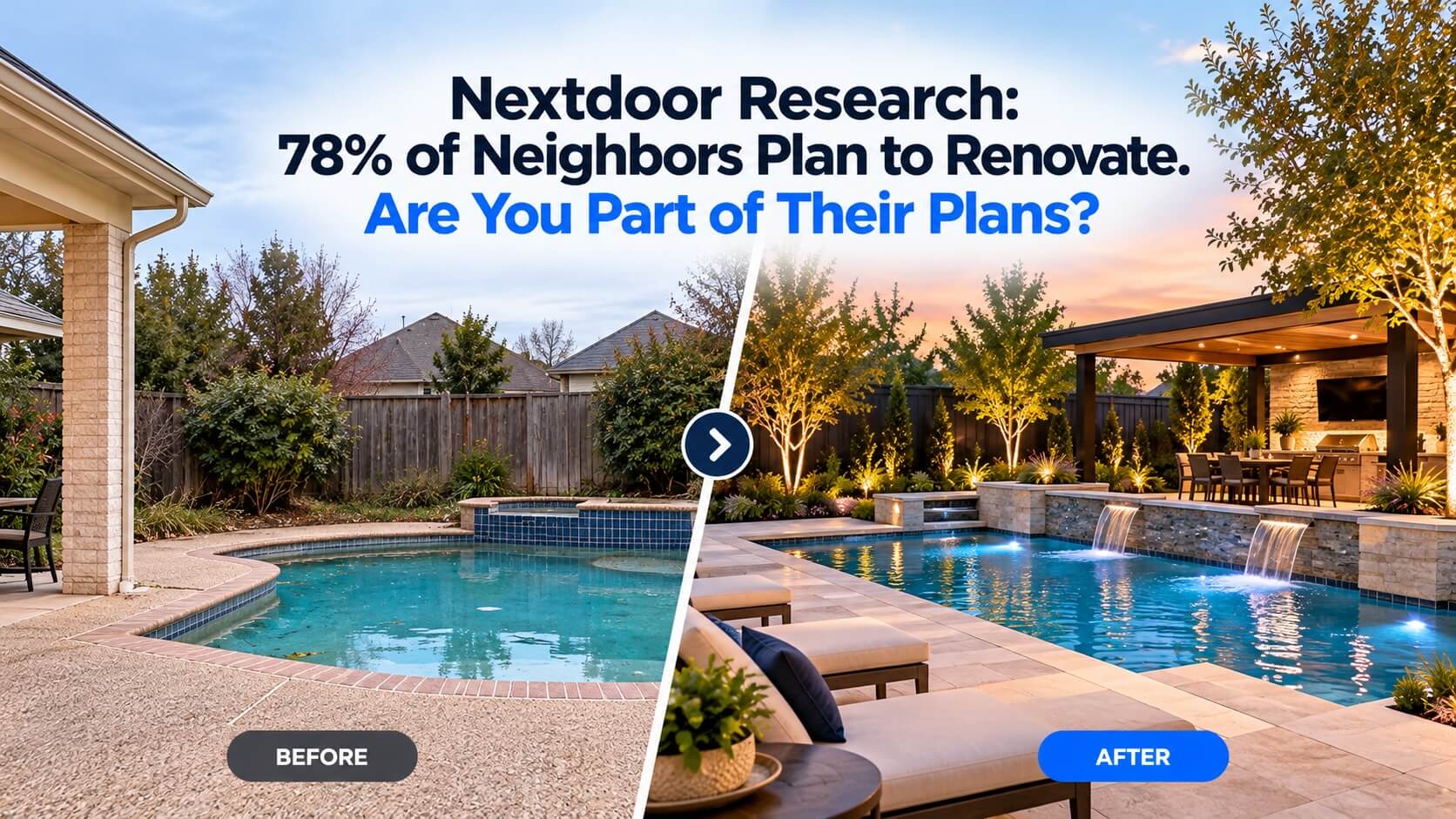
A finished pool project creates more than a photograph for a portfolio. It changes what nearby homeowners believe is possible on their own property. A resurfaced pool can make an aging backyard feel new; modern automation can make a frustrating equipment pad easier to live with; a carefully designed remodel can make an existing pool feel like an entirely different space. Established contractors already have this proof. The strategic question is whether their marketing uses it after the invoice is paid.
What the New Research Actually Says
On October 19, Nextdoor published findings from a September 2026 U.S. survey of its neighbors. It reported that 78% expect to renovate in the next 12 months, 49% are considering landscaping or yard improvements, and 44% said seeing a project nearby inspired them to consider their own. Another 42% said a nearby project made them interested in starting sooner. These are responses from surveyed Nextdoor neighbors, not a representative forecast of all U.S. homeowners or a measure of pool-specific demand.
The Overlooked Insight: One Project Has More Than One Audience
Most contractors treat the customer who signed the contract as the audience for the project. Yet nearby homeowners may be the second audience. They see trucks, materials, and visible changes over time. When the finished work is explained with context, the project becomes credible local evidence: what was wrong, why the owner chose this solution, how the work was managed, and what changed after completion. That is different from a generic before-and-after photo. It gives a future buyer a way to picture the same improvement on their own property.
A Five-Step Neighborhood Proof Roadmap
First, select completed projects with a meaningful customer problem and a result that can be shown responsibly. Second, secure written permission for photos, video, quotes, and any location details. Third, capture the story while the work is fresh: the original problem, options considered, project scope, and what the owner values about the result. Fourth, turn the story into several assets: a neighborhood-specific project page, a short explanatory video, a customer quote, and a sales follow-up example. Fifth, review inquiries and proposals from the relevant service area over time. Measure whether the story starts qualified conversations, not merely whether a post receives likes.
Pool Builders: Sell Confidence in the Process
For new construction, the valuable story may be how a homeowner solved a difficult site, created usable entertaining space, or selected the right features for family life. Show the completed pool, but also explain the design trade-offs and what was included. A neighbor considering a pool may not know whether their own property can support a similar design. A local project page can answer the question with proof and invite a site-specific consultation rather than making unsupported promises.
Pool Remodelers: Show the Decision Behind the Transformation
Renovation marketing often stops at the before-and-after comparison. Go further: why was the old surface failing, what did the homeowner want to change, and how were coping, tile, decking, lighting, and water features prioritized? Show an essential restoration option beside a more complete transformation when that comparison reflects a real customer choice. Nearby homeowners with similar-age pools can see both the opportunity and the trade-offs. The result is a more useful sales conversation than a generic “time to remodel” promotion.
Service Companies: Make Equipment-Pad Upgrades Visible
Equipment pads are rarely the glamorous part of a backyard, but they can be the most persuasive demonstration of expertise. A technician can document an aging or inconvenient setup, explain the owner’s operational problem, and show the finished automation, filtration, heater, or plumbing arrangement. Do not promise specific savings or performance without a proper assessment. The stronger story is about a documented customer need and a professional solution. Use the example in appropriate service areas and follow up with an equipment assessment, not an indiscriminate replacement pitch.
Hot Tub, Swim Spa and Pool Retailers: Translate the Idea Into Local Proof
Retailers can use neighborhood examples differently. With consent, a delivered hot tub can demonstrate a real installation setting and the experience of choosing seating, placement, and service support. A swim spa case can show how a homeowner evaluated space and access. Saunas may have different site requirements; above-ground pools may be seasonal. Retailers should distinguish inspiration from proof of product suitability, and invite shoppers to a showroom or site-readiness discussion instead of implying that every installation is interchangeable.
The Second Aha: Make the Story About a Decision, Not Just a Finished Job
An owner can ask salespeople to name the three questions prospects ask after seeing a finished project. Was the budget realistic? How disruptive was the work? What did the owner wish they had known? Add those answers to the project story. That turns a piece of marketing into an objection-handling asset. It also makes the content useful across sales conversations, email follow-up, the website, and neighborhood outreach.
What to Do in the Next 30 Days
Pick three projects from different categories: a pool renovation, a backyard remodel, and an equipment-pad modernization. Ask each customer for permission to document the story. Capture one 45-second explanation from the project manager or technician, three useful photos, and a customer-approved statement. Publish one detailed case page per project and create a follow-up email for nearby qualified prospects who have opted in to communications. Track consultation requests and proposals mentioning those projects. Repeat only the formats that create meaningful conversations.
The Bottom Line
The research is a reminder that home improvement ideas can spread locally. The business opportunity is to treat finished work as evidence that answers the next homeowner’s questions. One well-documented project can keep helping a company earn trust after the crew has left.
Want a strategy call? Get started here.
Frequently Asked Questions
Does Nextdoor’s 78% figure apply to all homeowners?
No. It describes respondents in Nextdoor’s September 2026 U.S. survey.
What projects make strong local case studies?
Projects with clear customer problems, permission to share, and useful evidence of the completed solution.
How can service companies use this idea?
Explain a documented equipment-pad problem, the selected upgrade, and the owner benefit without promising universal savings.
What should a remodeler measure?
Qualified local inquiries, consultations, accepted proposals, and the use of case studies in sales follow-up.
Turn Your Best Pool Projects Into Your Next Local Customers
Pool Marketing Site helps pool builders, remodelers, service companies, and retailers turn completed projects, customer stories, and neighborhood visibility into marketing that builds trust and generates qualified local leads.