
Text or Email? How to Choose the Right Message at the Right Time
Text or Email? How to Choose the Right Message at the Right Time
Should you text a new lead or send an email? What about appointment reminders, estimates, special offers, and customer follow-ups?
For pool builders, remodelers, service companies, and Hot Tub and swim spa retailers, choosing the right way to communicate can affect how quickly customers respond and how easily they make buying decisions.
Text messages are useful for quick conversations and timely updates. Email gives customers room to review details, photos, and proposals. The best approach is knowing when to use each.
The Details
Text: Best for quick conversations
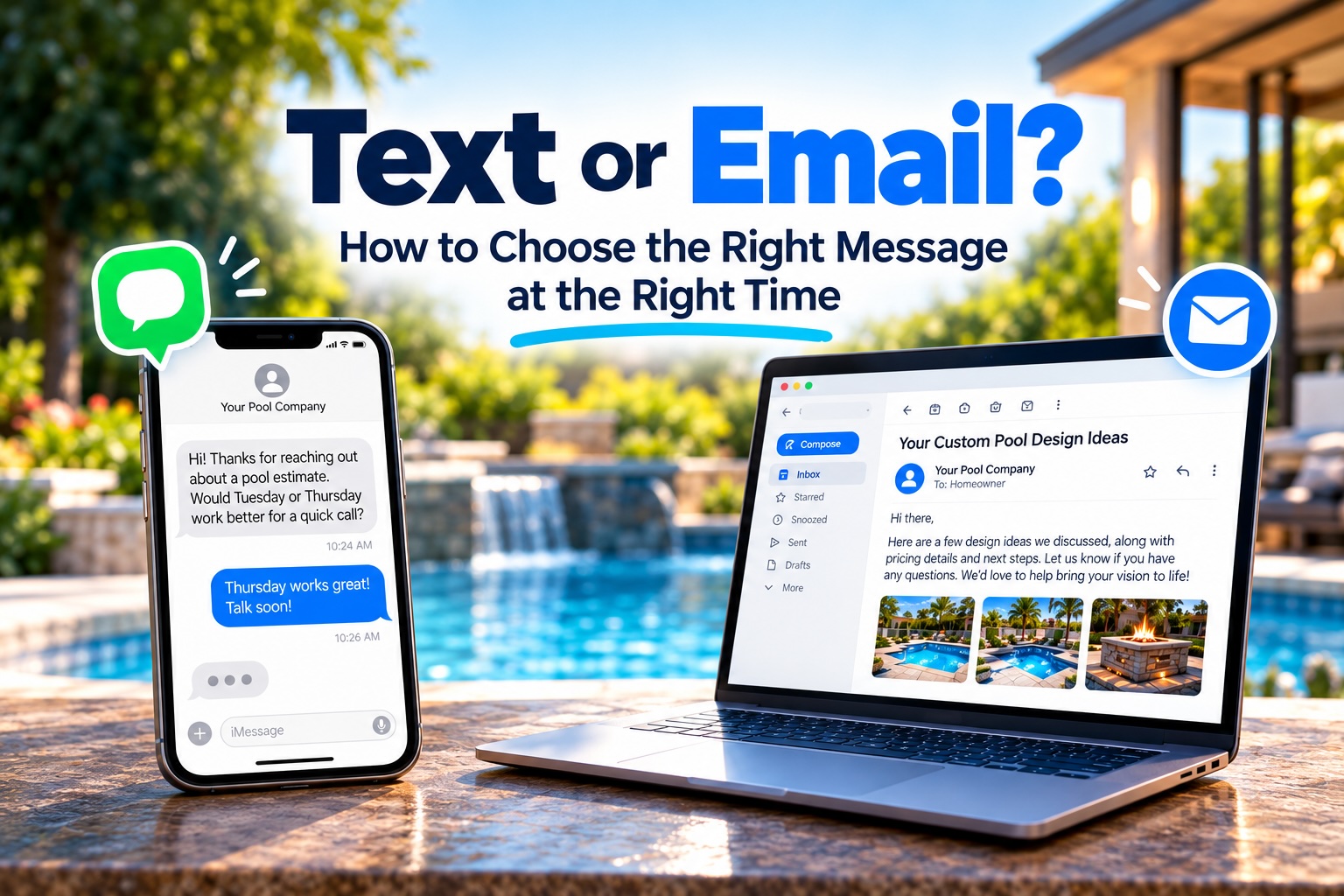
Texting works well when you need a short response or want to help someone take the next step. For example, a homeowner who just requested a pool estimate might appreciate a short, personal reply: “Thanks for reaching out. Would Tuesday or Thursday work better for a quick call?”
Use texts for new inquiries when permitted, appointment confirmations, reminders, simple questions, requested scheduling links, and timely service or delivery updates.
Email: Best for details customers need to review
A homeowner considering a new swimming pool may want to review design ideas, project details, and photos with family. Email gives customers space to read and return to that information later.
Use email for detailed estimates and proposals, pool designs, before-and-after photos, financing explanations, educational buying guides, newsletters, and care instructions.
Sometimes the best choice is both
Imagine a couple visits your Hot Tub showroom and asks about two models. Send an email with photos, specifications, and pricing details. If they have agreed to receive texts, a short follow-up can let them know the information is ready and invite questions. The email provides the details; the text helps continue the conversation. Not every email needs a text reminder.
A simple guide to choosing the channel
- New inquiry: prompt personal text or call, when permitted.
- Appointment reminder or service arrival update: text.
- Detailed estimate, pool design, or financing explanation: email.
- Showroom follow-up: email for model details; optional personal text when permitted.
- Seasonal promotion: email; promotional text only with the required permission.
- Post-purchase care guide: email.
- Review request: short text or email, depending on consent and customer context.
Why This Matters to Your Business
Every customer conversation has a purpose. Sometimes you need a quick answer. Other times you need to build trust, explain the value of a product, or help someone make a major purchase. A long text full of project details is hard to read. An email asking someone to confirm an appointment in two hours may be easy to miss.
Using the right channel helps customers get what they need without making your staff repeat information. It also makes follow-up easier to manage. The goal is not to send more messages. It is to send more useful ones.
Permission matters. Marketing texts may require prior consent, especially when automated systems are used. Record permission, provide required opt-out options, and honor requests to stop. Commercial marketing emails must follow applicable rules, including accurate sender information, a physical mailing address, and an unsubscribe option. Review current requirements before launching campaigns.
Key Takeaways
- Use texts for speed and simplicity: short questions, confirmations, and timely updates.
- Use email when details matter: proposals, designs, financing information, and buying guides.
- Use both when each message serves a different purpose.
- Do not overwhelm customers; every message needs a reason.
- Respect permission and honor opt-out requests.
What You Can Do
Review what happens after someone fills out a form, requests an estimate, books an appointment, or visits your showroom. Ask whether each message needs a quick reply or offers information the customer should keep. Check the timing and permission for each message.
Then write a simple plan for your team. A pool inquiry might get a prompt personal response and a later email showing finished projects. A Hot Tub shopper might receive a model comparison by email and a personal check-in. A service customer might get an arrival text and care recommendations by email. Track replies, appointments, and sales—not just how many messages you send.
The Bottom Line
Text is for quick conversations. Email is for information customers need time to consider. When each has a clear job, customers can understand their options and take the next step with less effort.
Want help building a better customer follow-up process? Get started with a Pool Marketing Site strategy call.
Frequently Asked Questions
Is texting or email better for following up with new pool and spa leads?
Texting is effective for quick responses, scheduling, and simple questions, while email works better for detailed proposals, project photos, and financing information. Using both strategically can help move prospects toward a decision.
When should pool and spa companies use text messages instead of email?
Use text messages for appointment reminders, service updates, confirmations, and time-sensitive questions. Email is better for estimates, design presentations, educational content, and information customers may want to reference later.
Can pool and spa companies automate customer texts and emails?
Yes. Marketing automation can help manage lead follow-up, appointment reminders, and customer communications. Businesses should obtain appropriate consent, follow applicable messaging regulations, and make it easy for customers to reach a real person when needed.
The Right Message. The Right Time. More Opportunities to Convert.
Pool Marketing Site helps pool and spa companies streamline customer communication with automated text and email marketing that delivers timely follow-ups, nurtures leads, and keeps prospects engaged throughout the buying journey.