
The Questions Customers Ask Before They Ever Call You
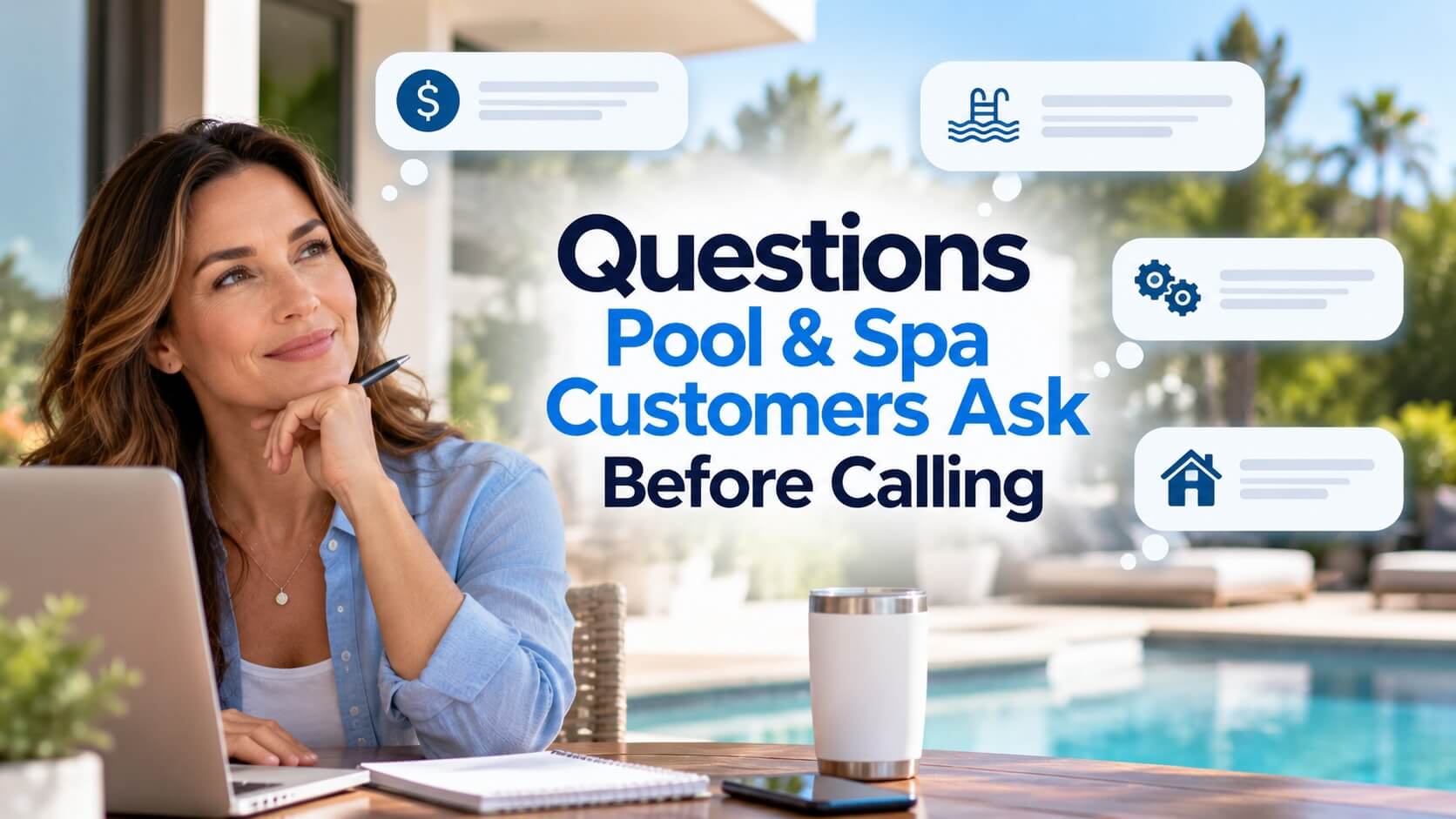
Start with the question nobody wants to answer
How much will this cost? For many pool and spa companies, that question arrives before a customer knows enough to describe what they want. Some businesses avoid answering because the final price depends on too many variables. That is understandable, but silence does not remove the question. It simply sends the buyer elsewhere for an estimate that may be less reliable.
Good content is a useful explanation
A helpful article does not need to publish a universal price for a custom pool. It can explain what changes the budget: site access, excavation conditions, pool size, materials, equipment, decking, permits, and optional features. A Hot Tub retailer can explain how purchase price differs from total ownership cost. A service company can explain the difference between routine maintenance and equipment repair. The aim is to help customers make sense of the decision, not to substitute a webpage for a professional estimate.
Questions reveal buying stage
Someone searching for backyard inspiration is not asking the same questions as someone choosing between two contractors. Early questions concern possibilities: what styles exist, how much room is needed, or whether a swim spa might fit. Middle-stage questions concern tradeoffs: fiberglass versus concrete, saltwater versus traditional sanitation, or which warranty terms matter. Late-stage questions concern action: what happens at the consultation, how deposits work, and how long scheduling may take. Content should serve more than one stage.
Ask the people who hear the questions
The most useful editorial meeting may not involve the marketing team. Ask salespeople which objections recur in consultations. Ask the service manager which misunderstandings cause unnecessary calls. Ask showroom staff which ownership questions buyers hesitate to raise. Review real email and chat inquiries with personal details removed. A list of twenty genuine customer questions is a better starting point than a calendar filled with generic ‘top five tips’ articles.
Show the answer when words are not enough
Some subjects need demonstration. A thirty-second clip can show the space required for a delivery path. A photo sequence can explain how a pool renovation changes from demolition to finish. A technician can show how to identify a component by its label when requesting service. Video and images should clarify the explanation, not replace important written details. Customers need to be able to find the answer again when they are ready to decide.
Answer honestly, even when the answer is inconvenient
Trust grows when a company acknowledges limitations. A pool may take longer than a customer expects because of permitting, weather, or unexpected site conditions. A hot tub requires ongoing water care. A remodel may reveal underlying issues that affect scope. Content that explains these realities can discourage unsuitable inquiries while improving the quality of conversations with serious prospects. That is not lost business; it is better expectation-setting.
Make the material useful in sales
Publish an explanation once, then put it to work. A salesperson can send a construction timeline before the first meeting. A Hot Tub retailer can share an ownership guide after a showroom visit. A service company can link to a preparation checklist when scheduling equipment replacement. Track which questions still require repeated explanation. Update the content when processes, pricing assumptions, or product lines change.
The editorial decision
Choose three questions that are important, common, and currently answered poorly. Assign someone with real technical knowledge to review the explanation. Write in plain language, use actual company examples, and give the reader a sensible next step. The goal is not to flood search engines with articles. It is to make the customer’s decision easier and your team’s conversations more productive.
Build an answer library
Organize content by decision rather than by publishing date. Create a short cost-and-planning section, a process section, a product-comparison section, and an ownership section. A visitor should be able to find the answer without scrolling through months of unrelated posts. Use descriptive page titles and link related explanations together. Review high-stakes information, especially safety, electrical, permitting, and chemical guidance, with the qualified team member responsible for that work.
Measure usefulness, not just traffic
An article may be valuable even if it never becomes your most visited page. Ask salespeople whether prospects mention reading it. Track whether visitors who view a guide request an appointment, and listen for fewer repetitive questions on calls. Notice when customers still arrive with inaccurate expectations. Those gaps reveal the next topic to cover. Content succeeds when it improves decisions, not simply when it adds pages to a website.
Questions that should not be oversimplified
Some customer questions involve safety or professional judgment. Electrical work, water chemistry, structural issues, and equipment diagnostics require qualified advice. An article can explain when a professional inspection is needed without telling an untrained homeowner to perform hazardous work. Similarly, price discussions should describe the factors that influence a proposal rather than presenting a single figure as a universal promise. The credibility of educational content depends on its limits being as clear as its recommendations.
Turn answers into a guided journey
Link a broad overview to the next logical question. A visitor reading about pool construction cost might then need a guide to project phases and a page describing what a consultation covers. A Hot Tub shopper comparing models may need delivery preparation and ownership-care information. A service customer reading about equipment symptoms may need an appointment request. The purpose of this sequence is not to trap a visitor in more pages. It is to give the person enough understanding to choose a next step confidently.
Frequently Asked Questions
What should a pool or spa owner do first?
Link a broad overview to the next logical question. A visitor reading about pool construction cost might then need a guide to project phases and a page describing what a consultation covers.
Does this apply to pool service companies?
Yes, when the business adapts the guidance to its own customers, service area, and sales process.
How should results be measured?
Use qualified inquiries, appointments, completed work, repeat purchases, or referrals as appropriate—not views or rankings alone.
Is this a guaranteed sales result?
No. It is an evidence-informed business practice; results depend on execution, market, and customer needs.