
TikTok Wants to Turn Inspiration Into Purchases. Here’s Why That Matters.
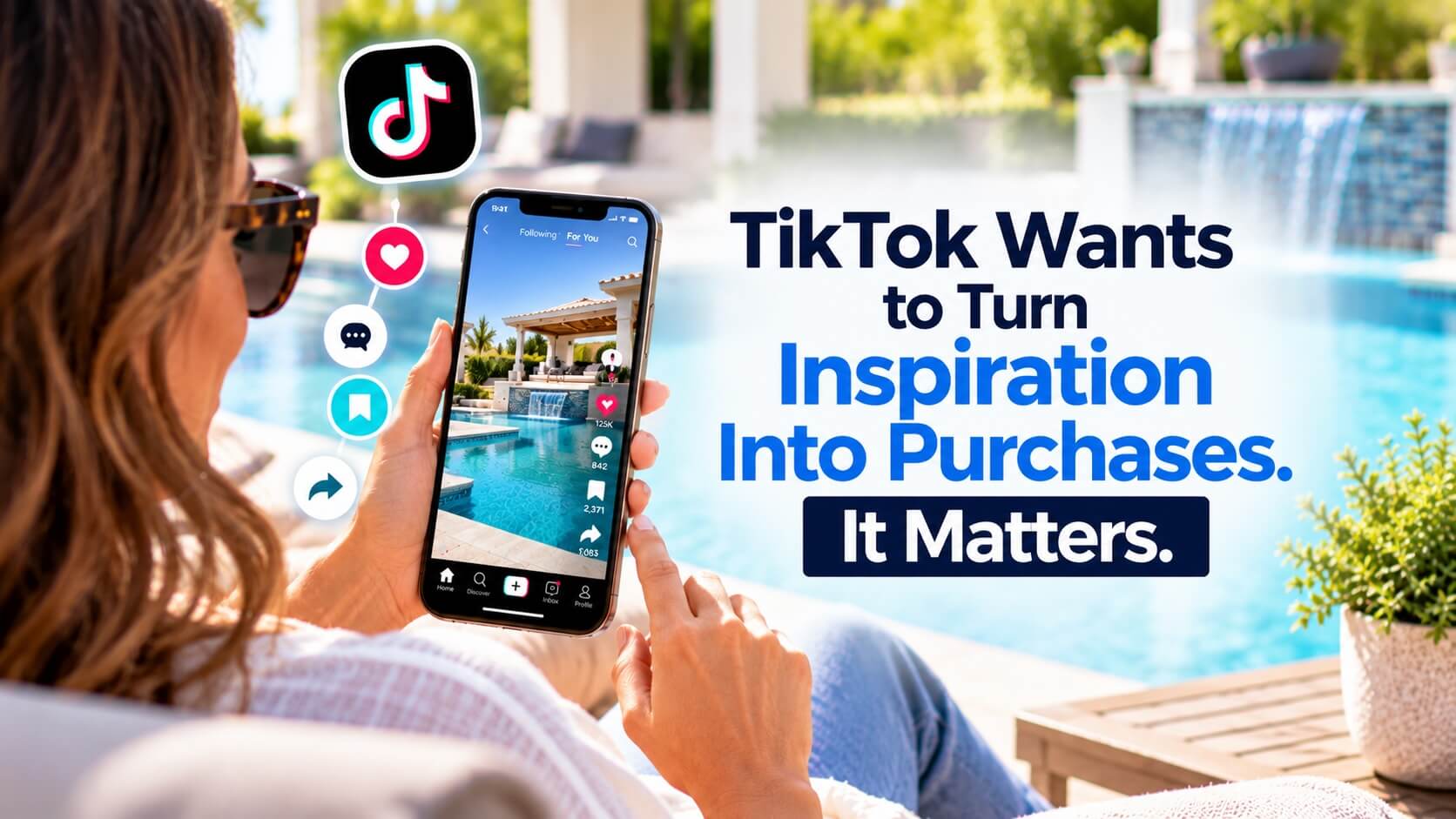
A video can start a shopping journey
A short clip of a pool renovation may stop a homeowner mid-scroll. They had not planned to research a remodel that day. A dramatic before-and-after creates the first spark. A video showing a hot tub’s seating layout may do the same for a shopper who has never visited a showroom. The question for a business is what happens after that spark.
What TikTok announced
In an October 5, 2026 announcement at Advertising Week New York, TikTok described AI-powered advertising and commerce tools intended to connect discovery with action. Its release also cited a commissioned economic-impact report and a claim about Americans purchasing products after watching TikTok videos. Those figures are platform-reported and cover products broadly; they do not measure custom pool sales. The announcement is evidence of TikTok’s product direction, not proof that every local service business can close a sale inside the app.
Why pool and spa businesses should care
The underlying shift is simple: social platforms want fewer dead ends between an interesting video and the next customer action. For an industry with visually striking products, that raises a practical question. If a viewer likes your finished pool, can they identify the builder? If they watch a service technician explain a repair, can they find the service area? If they see a hot tub demonstration, do they know how to book a showroom visit?
The difference between a view and a prospect
A video can reach people who will never buy in your market. A million views may be less valuable than a handful of local inquiries from qualified homeowners. Keep a distinction between content that builds broad familiarity and content designed to prompt a specific step. A project reveal may create aspiration. A follow-up clip explaining timeline, investment range, or what a consultation includes can help a serious buyer move forward.
What to film
Pool builders can show one decision a homeowner had to make during a real project, such as coping material or the placement of steps. Renovators can explain what changed and why. Service companies can demonstrate a common maintenance mistake without turning the clip into unsafe do-it-yourself instructions. Hot Tub retailers can compare seating arrangements or explain what delivery day requires. These videos are useful because they answer a real question rather than merely chasing a trending sound.
A clear next step
Every video does not need an aggressive sales pitch. But a company profile should make it easy to find the website, location, and contact information. A specific video can invite viewers to see more project details, request a consultation, or arrange a showroom visit. Make the promise match the destination. Do not tell people to ‘shop now’ if the linked page has no inventory or appointment option.
Measure the right things
Separate reach, engagement, profile visits, website visits, inquiries, and completed appointments. Ask which videos are reaching the local market and which are attracting serious questions. A strong social program may influence a customer who later contacts the company through search or a referral, so attribution will not be perfect. That is a reason for balanced measurement, not for abandoning measurement.
The useful lesson
TikTok’s announcement is not an instruction to put every marketing dollar into TikTok. It is a reminder that discovery and buying activity are moving closer together on social platforms. Businesses that make the next step easy can be ready for that behavior without confusing entertainment metrics with revenue.
Use social footage beyond social
A good project clip can also help a salesperson answer questions during a consultation. A hot tub demonstration can live on a product page. A service explanation can support an appointment reminder or follow-up email. Plan filming with these uses in mind. Capture clean footage, get permission when customers or private properties are identifiable, and keep a short description of what the video shows. This reduces the need to recreate the same explanation every time a new platform trend arrives.
Avoid platform dependency
Social discovery is valuable, but the relationship should not live only on an account the company does not control. Keep your website current, maintain an accurate business profile, and make it easy for interested viewers to contact the company through a reliable channel. When a platform changes its features, a business with a clear offer and a functioning follow-up process has more options than one that relies entirely on viral reach.
Use a project story, not just a reveal
A finished-pool video is appealing, but the most useful follow-up may explain a design choice. Why did the homeowner choose a particular finish? How did the builder handle a tight access route? What changed in the renovation? A Hot Tub retailer can show how a family compared two seating configurations and prepared the installation area. Keep the story factual and obtain permission before sharing private details. These clips answer the questions that serious buyers ask after the initial excitement fades. They also give the sales team something useful to send in follow-up.
A manageable publishing rhythm
A business does not need a daily production studio. Begin with one planned capture opportunity each week: a project milestone, a showroom explanation, or a technician answering a common question. Collect a clean wide shot, a close-up, and a short explanation from someone who knows the work. Review the footage for accuracy and safety before posting. Record which subject generates questions from people in your service area. Build on what proves useful rather than assuming every trend deserves a response.
Frequently Asked Questions
What should a pool or spa owner do first?
A business does not need a daily production studio. Begin with one planned capture opportunity each week: a project milestone, a showroom explanation, or a technician answering a common question.
Does this apply to pool service companies?
Yes, when the business adapts the guidance to its own customers, service area, and sales process.
How should results be measured?
Use qualified inquiries, appointments, completed work, repeat purchases, or referrals as appropriate—not views or rankings alone.
Is this a guaranteed sales result?
No. It is an evidence-informed business practice; results depend on execution, market, and customer needs.